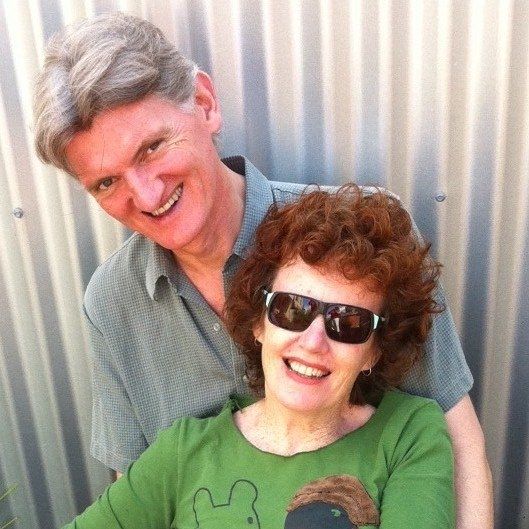
In Tuscany, all the roads to Rome converge. After walking by ourselves for 1,600 kilometres, we become part of a loose band of pilgrims that coalesces, embracing solitude by day and sociability in the evenings.

In Tuscany, all the roads to Rome converge. After walking by ourselves for 1,600 kilometres, we become part of a loose band of pilgrims that coalesces, embracing solitude by day and sociability in the evenings.
After we leave the beautiful mountains of the Alps behind, we descend through the foothills of Piedmont and enter the flatlands of the Po Valley.
For hundreds of kilometres, we walk among flooded rice paddies and follow canals, past abandoned and now derelict Cascine, farm complexes where peasant families lived and worked their entire life under the control of the farm owner.


The renowned champagne-producing areas of Reims, Trépail, Châlons-sur-Champagne and Bar-sur-Aube are dotted along this section of the Via Francigena. The hillsides of vines are bright green with spring’s new growth and we walk with a lightness in our step.

We walk the Via Francigena as it follows the bloodied battlelines of the Western Front. For hundreds of kilometres, almost every village we pass through bears the scars of the death and destruction of WW1.
Out from Calais, we walk through a landscape still hollowed out by war. Shell holes, deep craters and bunkers collapsing onto the beach, the sand tilting them, the sea slowly subsuming them.
Read MoreAustralia has a federal election, and we want our vote to count. So much so that we walk 200 kilometres, following the coast from Calais to the seaside village of Wissant before turning inland and continuing on through the rolling green countryside of northern France to Arras.


An officious French police chief, an unsung Ukrainian hero, a native of Dover shining a light into the gloom. It’s the people we meet that make this journey so fascinating.
After the lightness and brightness of the Kent countryside, Dover strikes us as dour and down at heel. Even its young people seem world-weary and bereft of joy. But then, over a glass of excellent English white wine, our waiter, a native of Dover, tells us of his boyhood roaming the chalk hills and exploring the tunnels under Dover Castle. The wildness of it, the depth of its history and the rhythm of a port town with people constantly on the move is what makes Dover sing for him.
At border control in Dover, an officious French police chief upends our plan to ride our hastily acquired BMX onto the ferry. He argues that two people on one bicycle, one pedalling and the other standing on the back foot pegs, is not only dangerous but absolutely forbidden. We plead our case but he threatens to arrest us if we don’t desist.
Read MoreThe Via Francigena is an ancient road and pilgrimage route from the English cathedral city of Canterbury to Rome, Italy’s Eternal City. The 2,000-kilometre way was first documented by Sigeric the Serious, Archbishop of Canterbury. In 990 AD he travelled to Rome and back for his consecration using a network of Roman roads originally constructed to facilitate trade and conquest.
Just as Sigeric did, we start our journey at Canterbury Cathedral. In the hush of early evening, we stand with Canon Emma Pennington by the eternal candle that marks where Thomas Becket’s body once lay. She prays that on the hard days on the Via Francigena we find the perseverance and strength to continue and on the days that the sun shines and the birds sing we open our hearts to the world and know its beauty.

This is a two-night / three-day 36.6km circuit walk that can be shortened to an overnight walk by arranging transport from Borough Huts Campground back to Halls Gap.
(Note: the full length of the Grampians Peaks Trail, a 160km 13-day walk, is now open).
For the three-day walk, we carried 2 days’ food by having breakfast at a cafe the day we started and arrived back in Halls Gap for a late lunch on day 3. Fuel stoves must be used at Hiker camps. Water tanks are located at each camp. Parks recommends treating the water.

Day 1: Day 1: Halls Gap to Bugiga Hikers Camp: 8.6km. A well-made track that climbs nearly 500 mostly well-graded meters. It takes in some of the most popular sights in the Grampians including the Grand Canyon and the Pinnacle, so expect plenty of day-walkers in the Wonderland Carpark to Pinnacle section. The trail marking is very good but you’ll need to pay attention when leaving the Pinnacle as there are a few tracks and not every intersection is marked.
Read More On a warm hazy afternoon, we met our French friends, Jean and Marie-José, on the steps of the Lisbon Cathedral, procured our pilgrim credentials and set out to walk the Camino Portugues.
This is our third Camino. In 2005 we walked the 750 km Camino Françes from St Jean Pied du Port on the French side of the Pyrenees, across northern Spain to Santiago de Compostela. Three years later we walked the Via de la Plata, a 1,000 km journey from Seville in the south of Spain to Santiago de Compostela. It was on this walk that we met and fell in with Jean and Marie-José, our affection for each other and ‘the way’ triumphing over our limited grasp of French. We last saw them in 2010 when we spent a few idyllic days in their village of Saint-Thomè in the wild and beautiful Ardèche. Now we are together again, to walk the 650 km Camino Portugues from Lisbon, through Portugal and into northern Spain, hugging the coastline where we can and avoiding the more travelled inland route.
The Larapinta Trail takes the walker deep into the astonishingly beautiful red-heart of Australia.
Following the spine of the Tjoritja / West MacDonnell Ranges, the Larapinta Trail traverses the land of the Arrernte people. Their songlines tell of ancestral beings who travelled this country, bringing its flora, fauna, waterholes and landforms into life. The trail extends for 225 kilometres, from Mt Sonder to the desert town of Alice Springs. It weaves its way through spectacular gorges, climbs over rugged peaks, drops into green oases and follows the meanderings of ancient rivers.
Read MoreSubscribe today and you'll be the first to receive our stories of walking, cycling and wandering the world.